
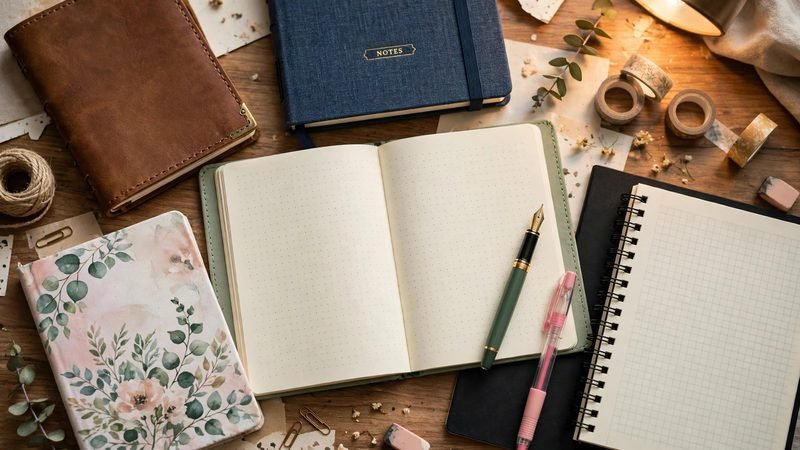
Knowing how to choose a notebook sounds trivial until you are standing in front of forty near-identical options, half of which will bleed ink, shed pages, or refuse to lie flat. The right choice depends on four things — paper, binding, size and ruling — matched to what you actually write. What follows works through them in priority order.
Answer one question first, because it decides everything else: what will live in this notebook? Daily journaling, meeting notes, sketches, study notes and fountain-pen calligraphy each want a different notebook, and most disappointment comes from buying a good notebook for the wrong job.
Paper Quality: The Decision Everything Else Hangs On
Paper weight is measured in grams per square metre (gsm), and it is the single best predictor of whether you will enjoy a notebook. Standard copier paper is 80gsm. Notebooks range from feather-light 52gsm Japanese papers to 160gsm sketchbook stock, and the right number depends on your pen.
Ballpoints and pencils behave on almost anything from 70gsm up. Gel pens and rollerballs lay down more ink, so look for 80–100gsm; thinner stock feathers (the ink creeps along the fibres) or shows through the sheet. Nothing tests paper like a fountain pen. On stock under about 90gsm the ink tends to strike through, leaving a ghost of your writing on the following page. The honest shortcut in learning how to choose a notebook is to buy for the wettest pen you own.
Paper colour matters more than people expect — another variable in how to choose a notebook that only shows itself after a week of writing. Bright white maximises ink contrast; ivory or cream is gentler for long writing sessions and flatters fountain-pen inks. Smooth papers show off ink shading and dry fast; textured papers give pencils and fineliners pleasant feedback but can feel scratchy with stiff nibs.
Binding: How the Notebook Opens Decides How It Feels
Thread-stitched binding is the gold standard: signatures of folded pages sewn together, durable for years and — in well-made notebooks — opening completely flat. If a notebook will be written in daily for months, stitched is what you want.
Glued (perfect) binding costs less and looks clean, but pages can loosen and the spine resists lying flat. Spiral and disc bindings open flat and fold back on themselves, which suits desk work and left-handers, at the price of bulk and snagging in bags. Stapled pocket notebooks trade longevity for cheapness and slimness, which is exactly right for a notebook that lives in a jacket for a month. In how to choose a notebook, portability is a specification like any other.
Size: Match the Notebook to Where It Will Be Used
The common sizes exist for reasons. The default for most writers is A5 (roughly 148 × 210mm): page space for proper writing, in a size no ordinary bag refuses. Most journals and planners are built around it. A4 and B5 suit study notes, diagrams and desk-only work where two-page spreads earn their keep.
Pocket sizes (A6 and smaller) win on presence: a notebook you carry beats a better notebook at home. When in doubt between two sizes, choose the one that fits the bag or pocket the notebook will actually travel in. Half of how to choose a notebook well is logistics, not stationery romance.
Ruling: Lines, Dots, Grids or Blank
Ruled pages keep handwriting honest and speed up long-form writing; narrow ruling suits small handwriting, wide ruling suits large pens and large letters. Dot grid is the modern default for a reason — it guides writing like lines, supports sketches and tables, and all but disappears when you stop looking for it.
Square grids favour diagrams, maths and precise layouts, which is why engineers love them. With nothing printed on them, blank pages suit sketchers and mind-mappers, though prose can drift without lines to hold it. One notebook for everything? Dot grid is the compromise almost nobody regrets — most advice on how to choose a notebook lands in the same place — because it borrows the same structured-but-flexible thinking behind the layouts in our guide to planners for executive functioning.
Cover, Closure and the Details You Touch Daily
Hardcovers protect pages in bags and give a writing surface anywhere; softcovers flex into pockets and weigh less. Leather and cloth feel better with age; coated card shrugs off coffee. Decide by where the notebook will live, not by the shelf photo.
Small features compound daily: an elastic closure that keeps loose notes in, a ribbon marker (two is better), a back pocket for receipts, and numbered pages with an index if the notebook becomes a reference. Perforated pages matter only if you tear pages out often. None of these rescue bad paper — which is why this guide put paper first, and why experienced buyers checking how to choose a notebook flip to a back page and test their own pen before anything else.
Matching Notebook to Job: Quick Recommendations
Journaling: A5, stitched, 90–100gsm ivory paper, dot or ruled, hardcover with a marker ribbon. Meeting notes: A5 or B5, spiral or disc binding so pages fold back, 80gsm is fine for ballpoint. Study notes: B5 or A4 in grid ruling, in a stitched or spiral binding, on stock that tolerates highlighter ink.
Fountain-pen writing: the heaviest smooth paper you can find, from specialist Japanese or French makers, in a lay-flat stitched binding. Sketching: 120gsm+ blank, stitched so spreads open flat. And if the notebook is really a planning system, compare it against dedicated planners and the best writing software for authors before spending — some workflows honestly belong in an app.
Frequently Asked Questions
Which paper weight suits a fountain pen?
Start at 90gsm from a maker who takes paper seriously, or go straight to papers milled specifically for fountain pens. Weight alone is not the whole story — coating and fibre matter too — so if you use wet, broad nibs, test one page before committing to a stack — paper is the first specification to settle in how to choose a notebook for pen work.
Is A5 or A6 better for journaling?
A5 for most people: it fits a comfortable page of writing without feeling like homework. A6 suits brief daily logs and travel journals where portability wins. If your entries regularly pass a page, the A5’s room will keep you writing longer.
Why does ink bleed through my notebook?
Nine times out of ten the sheet is simply too thin, or drinks ink too greedily, for the pen you used. Gel and fountain pens lay down more ink than ballpoints; step up to a heavier, better-sized paper, or switch the pen. One of the two always fixes it.
Are expensive notebooks worth it?
For paper quality and binding, often yes — the difference between a budget notebook and a good one is obvious on every page. Past the mid-range, your money buys leather, branding and design rather than better writing — perfectly fine if those delight you. But paper quality is where handwriting improves, so the oldest rule in how to choose a notebook is to spend there first.
Decide the job, buy paper your wettest pen respects, pick the binding that opens the way you work — and the notebook will disappear under your writing, which is the highest praise a notebook can earn.