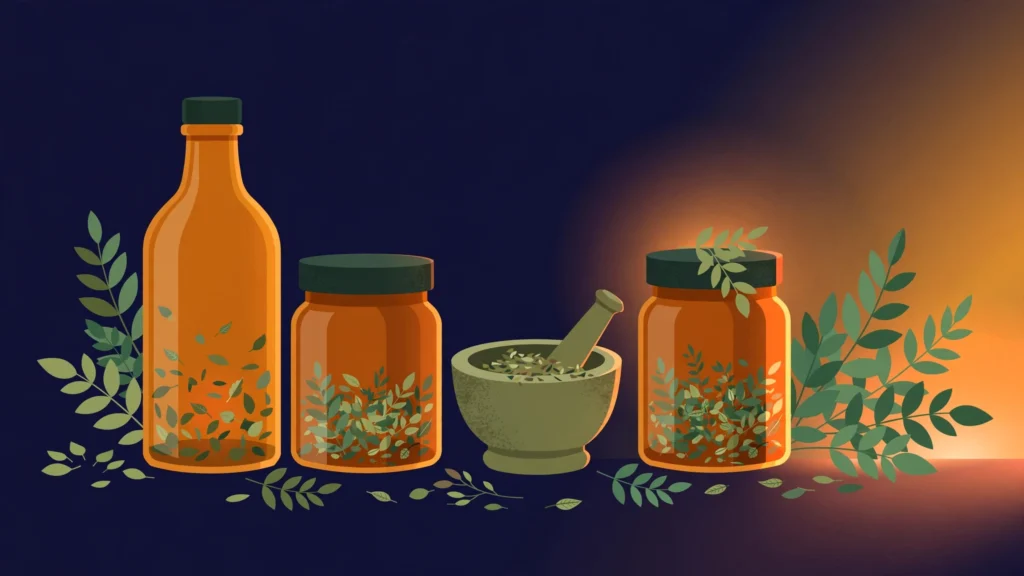
Every health shop and wellness feed tells the same story lately: ashwagandha for stress, turmeric for joints, elderberry for winter. Shoppers are reaching for plant-based products, and founders have noticed. Starting a brand no longer means building a factory — contract manufacturers will make the product for you. What it means is rules, paperwork, and your name on a label you answer for. This herbal supplement business startup checklist walks you from first idea to first sale, in the order that actually works.
One warning first: order matters. Print labels before you understand claims, and you can strand money in boxes you cannot sell. Work the phases in sequence — each makes the next cheaper.
The Herbal Supplement Business Startup Checklist, Phase by Phase
Seven phases, in the order your money and attention should move. None is safely skippable.
Phase 1: Pick a Narrow Niche and One First Product
Broad wellness brands are expensive to build and easy to forget. Go narrow instead: one customer, one recurring problem, one product. A name like "plant-based sleep support for shift workers" describes an actual business. "Natural wellness products" describes a wish. Treat product one as a test.
- Choose the customer first: age, routine, and the moment of the day your product fits.
- Pick one hero product — capsules, gummies, powder, tea or tincture — and park the rest for later.
- Read competitor reviews like field notes: complaints reveal the opening (taste, capsule size, timid doses, vague labels).
- Check each herb’s regulatory age: botanicals sold in the US before October 1994 are established; anything newer may be a "new dietary ingredient" needing FDA notification first.
Phase 2: Register the Business and Protect the Name
- Form an LLC — the structure most small brands start with — so the business stands apart from your personal finances.
- Get an EIN from the IRS (free) and a dedicated business bank account. Brand money and household money never mix.
- Check state and city requirements: a business licence, and a seller’s permit if you must collect sales tax.
- Search the federal trademark database and domain names before falling in love with a name. Rebranding later is painful.
- Selling from home? Confirm zoning and your lease or HOA allow it — inventory storage is the usual sticking point.
Phase 3: Learn the FDA Rules Before You Spend on Product
The surprise for most founders: the FDA does not approve dietary supplements before they are sold. Under DSHEA, the 1994 law governing this industry, supplements sit in their own category of food, and responsibility for safety and honest labelling sits with you. The FDA mostly acts after products reach the market.
- Manufacturing is regulated. Whoever makes, packs or labels your product must follow the current Good Manufacturing Practice rules in 21 CFR Part 111: identity checks, batch records, testing.
- Disease claims are forbidden: a product that "treats anxiety" or "prevents colds" is, to the FDA, an unapproved drug.
- Structure/function claims are the legal middle lane — "supports restful sleep", "helps maintain joint comfort" — each needs evidence, the FDA disclaimer printed alongside, and notification to the FDA within 30 days of marketing.
- A genuinely new ingredient triggers the NDI process: notify the FDA at least 75 days before selling, with safety evidence.
- The FTC polices advertising under the same rules: captions, product pages and influencer scripts are advertising too.
Read one level deeper before you brief a designer: the FDA’s dietary supplement labeling guide sets out what belongs on a supplement label. It is the spec sheet for Phase 6.
One honesty note: this is general business education, not legal advice. Get a regulatory attorney to read every claim on the label long before printing day.
Phase 4: Choose How Your Product Gets Made
Almost nobody starting out owns a production line, and you do not need one. Contract manufacturers make the product; your job is choosing the model — and the partner — carefully. Private label is the fast lane: your brand on an existing formula, low minimums (often hundreds to around a thousand units), selling within weeks. Custom formulation is the slow lane: a recipe that is yours alone, higher minimums, longer timelines.
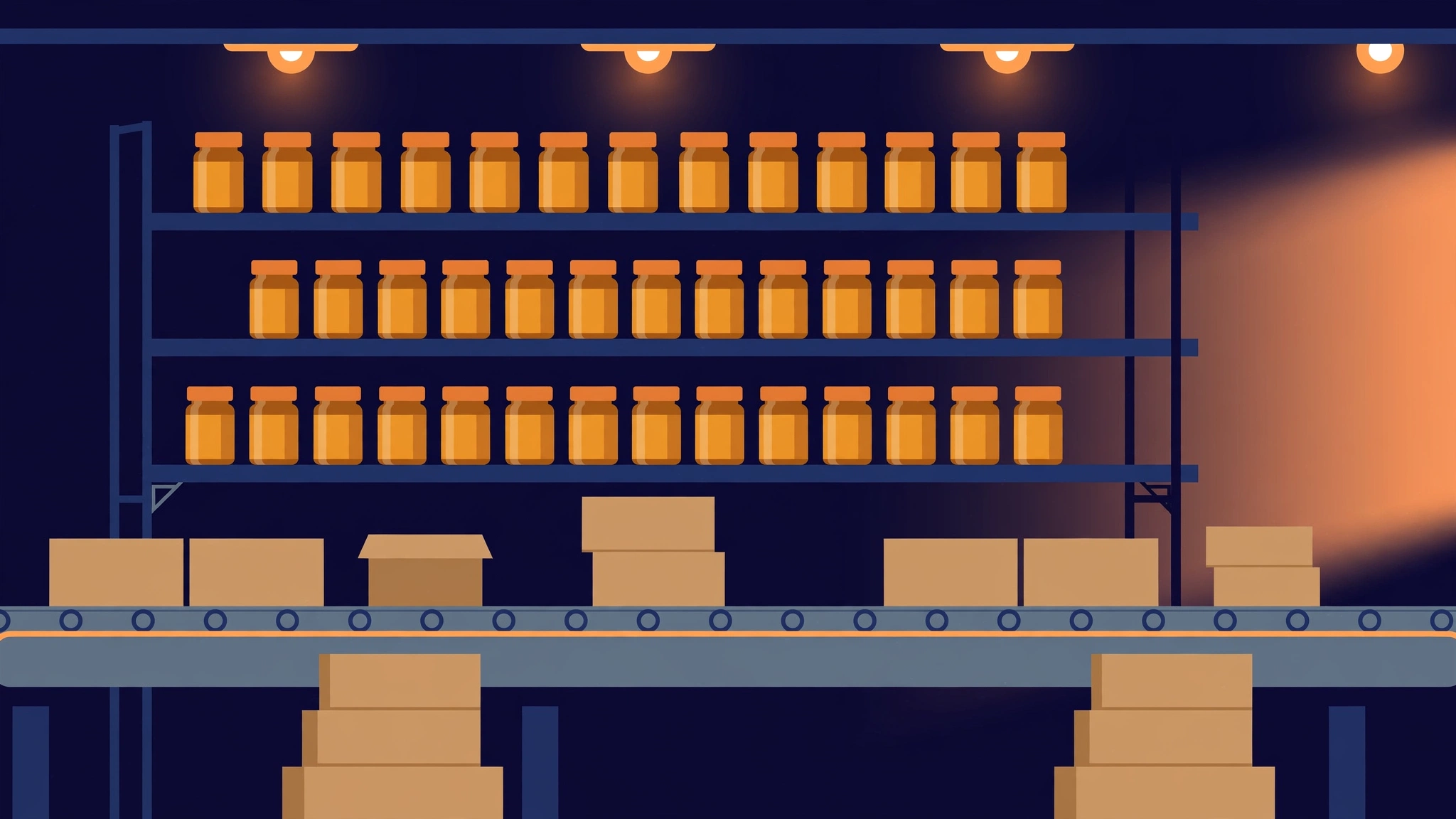
- Ask for proof, not promises: cGMP compliance, an FDA-registered facility, recent third-party audits.
- Require a certificate of analysis (COA) per batch — and agree in writing what happens when one fails.
- Order samples and live with them for two weeks: taste, smell, capsule quality are data.
- Get the deal in writing: formula ownership, lead times, payment schedule, who pays for their mistakes.
Phase 5: Testing and Quality You Can Actually Prove
Herbs are farm products. The same plant varies by grower, season and drying method, and botanicals pick up heavy metals from soil and microbes from handling. So testing is not a marketing extra — it is the core of the product. cGMP already requires identity testing on incoming ingredients and checks against written specifications for purity, strength and composition. Smart brands add an independent lab between themselves and the manufacturer’s word.
- Budget for third-party lab testing on finished batches: identity, potency, heavy metals, microbial counts — the standard botanical panel.
- File every COA by lot number; print the lot number on each bottle. Traceability turns a frightening complaint into a manageable one.
- Set up adverse-event handling before launch: the contact route on your label must work, and serious events must reach the FDA within 15 business days.
Phase 6: Labels and Packaging That Stay Legal
Your label is a legal document wearing a designer’s clothes. Five elements are mandatory on a US supplement label; missing any one makes the product "misbranded" — the term that gets listings removed. Brief your designer with the rules first, colour palette second.
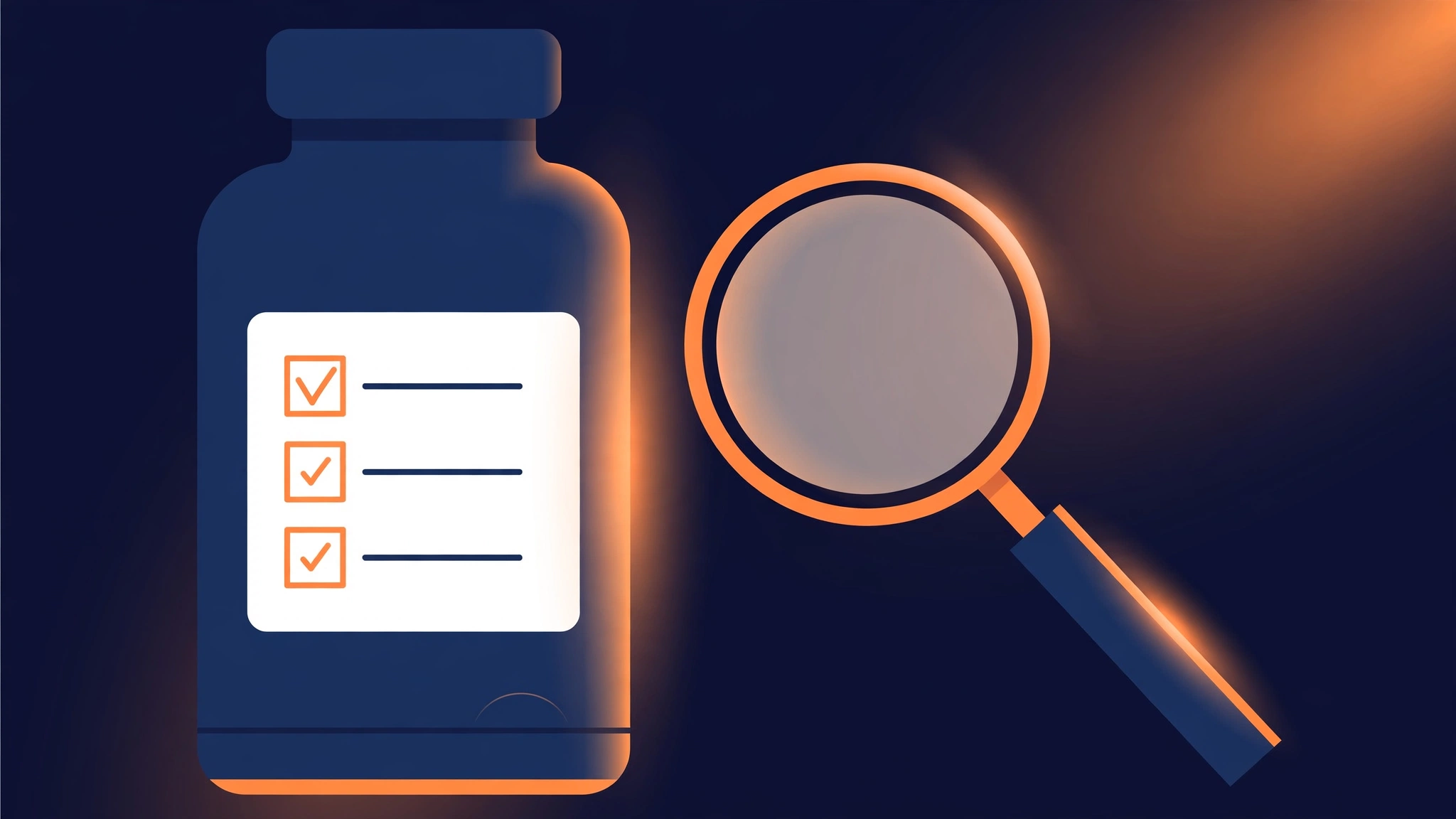
- Statement of identity on the front panel: the product name, with "dietary supplement" or "herbal supplement" right in it.
- Net quantity of contents, bottom of the front panel: "60 capsules", "Net Wt. 4 oz".
- A Supplement Facts panel — never "Nutrition Facts": serving size, servings per container, each ingredient’s amount per serving, % Daily Value where one exists.
- A full ingredient list. For herbs the plant part matters (root, leaf, flower) and botanicals go by Latin names — plus "Other Ingredients" for capsule shell, binders and flavours, and allergen statements.
- Name and place of business of the manufacturer, packer or distributor — usually your brand — with a working contact for adverse-event reports.
- Any structure/function claim carries the exact FDA disclaimer: "This statement has not been evaluated by the Food and Drug Administration. This product is not intended to diagnose, treat, cure, or prevent any disease."
Packaging rides along: tamper-evident seals are expected by marketplaces, amber bottles protect light-sensitive herbs, and selling into California brings Proposition 65 warning questions on botanicals.
Phase 7: Insurance, Sales Channels and the Launch Itself
Buy product liability insurance before the first sale, not after the first scare. Supplements are things people swallow; claims happen even to careful brands. Amazon expects sellers past a modest sales level to carry cover; many retailers ask for a certificate first.
Then decide where the first sale happens. Your own store — Shopify or WooCommerce — keeps the margin and the customer relationship, and hands you email addresses instead of just orders; the cost is that every visitor is yours to earn. Amazon brings the shoppers and takes fees, strict policies and documentation checks in exchange. Start in your own store, prove the product, then add Amazon. Either way, sort fulfilment first: who packs, who ships, where returns go.
What It Really Costs: The Main Buckets
There is no honest single number — but every line on a herbal supplement business startup checklist budget falls into the same buckets:
| Cost bucket | What it covers | Rough range |
|---|---|---|
| Business setup | LLC filing, EIN (free), permits, trademark search | A few hundred dollars |
| Brand and label design | Logo, label artwork, packaging dieline | A few hundred to a few thousand dollars |
| Your first production run | The private-label product itself, bottles, seals and printed labels | Usually $5,000–$25,000, driven by order size |
| Testing and compliance | Lab panels, COAs, label and claims review | Hundreds to a few thousand dollars |
| Insurance | Product liability policy, year one | A few hundred to a few thousand dollars a year |
| Getting the store live and marketing the launch | Your website, product photography, samples and first ad spend | A few thousand dollars |
Read every number here as a planning range, never as a quote. The figure that matters is the one in your signed agreement. Keep a reserve for the second order: success that stocks you out for six weeks is its own failure.
Marketing Inside the Guardrails
Herbal products are naturally content-friendly: people want to know what ashwagandha is, why the root is the part used, how a tincture differs from a capsule. Teach that, honestly and often, and you are marketing. The guardrails are about claims, not creativity — words illegal on a label are equally illegal in a caption.
- Build an email waitlist before launch, with a founding-customer discount. Those first fifty buyers carry a new brand.
- Make education your content engine: ingredient explainers, sourcing stories, how your testing works.
- Ask every customer for a review, and publish the mixed ones too. Believable beats perfect.
- Never let a testimonial do what your label cannot — a customer’s "this cured my insomnia" is still a disease claim when you publish it.
- No borrowed credibility: no doctor endorsements you do not have, no "clinically proven" without proof, no fake scarcity.
- Brief influencers with your label’s claim rules. You are answerable for what they say.
Mistakes That Sink New Supplement Brands
- Printing thousands of labels before a claims review, then pulping the lot over one illegal sentence.
- Choosing the manufacturer on price alone, and learning from a customer what "no COA available" means.
- Launching five products at once, so none gets enough marketing or reviews to survive.
- Treating insurance and testing as growth-phase luxuries. In supplements they are opening-day costs.
A Simple Launch Timeline
Timelines flex with your manufacturer, but a private-label launch commonly fits inside one season:
- Weeks 1–3: niche, product choice, competitor and ingredient homework; the one-sentence promise written.
- Weeks 3–6: LLC, EIN, bank account, trademark search; manufacturer shortlist, quotes, samples.
- Weeks 6–10: formula and label artwork finalised, claims and label review passed, insurance bound.
- Weeks 10–14: production finished, batch testing and COAs filed, store built, waitlist growing.
FAQs
Do I need FDA approval before selling herbal supplements?
No — and anyone offering to sell you "FDA approval" is selling something that does not exist. Under DSHEA there is no pre-approval step; the responsibility is yours. The product must be safe, cGMP-made and honestly labelled, and the FDA can act the moment it is not. One exception: a genuinely new ingredient needs the 75-day NDI notification (Phase 3).
How much does it cost to start a herbal supplement business?
Price the buckets in this herbal supplement business startup checklist with written quotes, and a lean private-label launch usually lands between roughly $7,500 and $25,000 all-in for the first sellable product. Your manufacturer’s minimum order moves the number more than anything else; custom formulas cost more.
Private label or custom formula — which is better for a first product?
Private label, for most first-timers: a compliant, tested product selling quickly at a survivable order size. Its sales answer the questions a custom formula should be designed around — who buys, at what price, with what complaints. Go custom once the idea has earned it.
What can I legally say about what my product does?
You may describe normal structure and function — "supports relaxation", "helps maintain healthy joints" — when you hold evidence, print the FDA disclaimer beside it, and notify the FDA within 30 days of marketing. Never claim to diagnose, treat, cure or prevent a disease, in any wording, anywhere: label, website, ads, reviews you republish.
Do herbal supplements need third-party testing?
cGMP requires manufacturers to test ingredient identity and check products against written specifications — that layer is law. Independent third-party testing of finished batches is the layer you add for proof: it verifies the manufacturer’s COAs, satisfies marketplaces and retailers who ask for documentation, and gives customers a reason to believe the label. For botanicals, non-negotiable.
Can I sell herbal supplements on Amazon?
Yes, many brands do — but Amazon runs its own compliance desk on top of the law. Expect to supply test results and COAs, keep every claim inside the same rules as your label, and carry product liability insurance once sales pass Amazon’s threshold. Listings are suspended over paperwork more often than products — keep the documentation folder immaculate.
The Bottom Line
An herbal supplement brand is a trust business disguised as a product business. The herbs are the easy part to source; the scarce ingredients are discipline about claims, paperwork you can produce on demand, and patience to launch one good product before five mediocre ones. Work this herbal supplement business startup checklist in order — niche, structure, rules, manufacturing, testing, labels, insurance, launch — and you build what competitors skip: a brand that deserves to be believed.
Keep exploring: more practical business guides like this one live in our Business section.